
If you’ve ever felt a sharp, burning pain shoot from your lower back down through your leg, you already know how disruptive sciatica can be. It doesn’t just hurt — it limits everything. Getting out of bed in the morning, sitting through a workday, going for a walk with the family, even sleeping comfortably can feel nearly impossible when sciatica flares up. Here in San Luis Obispo, many patients come through our doors at Momentum Chiropractic after months — sometimes years — of trying to manage this kind of pain on their own. The good news? Sciatica is one of the conditions chiropractic care is particularly well-suited to address, and building real momentum toward relief often starts sooner than people expect. To see how we care for sciatica at our office, visit our sciatica treatment page.
What Is Sciatica, Exactly?
Sciatica is not a diagnosis on its own — it’s a symptom. It refers to pain that radiates along the path of the sciatic nerve, which is the largest nerve in the human body. That nerve runs from the lower lumbar spine, through the buttocks, and down each leg all the way to the foot. When that nerve becomes irritated or compressed, the result is often the familiar combination of lower back pain, leg pain, tingling, numbness, or weakness that patients describe as sciatica.
Common Causes of Sciatic Nerve Pain
Understanding what triggers sciatica in the first place is an important first step. In most cases, sciatica develops because something is physically impinging on the sciatic nerve — and there are several common culprits that Dr. David Sedghi and the team at Momentum Chiropractic evaluate during every new patient visit.
One of the most frequent causes is a herniated or bulging disc in the lumbar spine. The discs between your vertebrae act as cushions and shock absorbers. When one of those discs shifts out of place or the outer layer breaks down, it can press directly against the sciatic nerve root. This is the root cause of sciatica for a large portion of the patients we see in San Luis Obispo.
Spinal stenosis — a narrowing of the spinal canal — is another common cause, particularly in older adults. As we age, the spine undergoes natural changes that can reduce the space available for the nerves, leading to compression and the radiating pain that characterizes sciatica. Piriformis syndrome, where the piriformis muscle in the buttocks tightens and irritates the sciatic nerve, is another cause that often gets overlooked. Misalignments in the lumbar vertebrae — what we call subluxations — can also contribute to nerve irritation over time.
Signs and Symptoms to Watch For
Sciatica has a fairly recognizable presentation, but it doesn’t always look the same from person to person. The classic symptom is a pain that starts in the lower back or buttock and travels down one leg — sometimes all the way to the foot. That pain can feel like a dull ache, a sharp burning sensation, or even an electric shock-like jolt that comes on suddenly with movement.
Many people also experience numbness or tingling — often described as a “pins and needles” feeling — in the affected leg or foot. Some notice a weakness in the leg that makes it harder to walk, stand for long periods, or climb stairs. One important characteristic of sciatica is that it typically affects only one side of the body at a time, though bilateral sciatica can occur in more severe cases.
What makes sciatica particularly frustrating is how variable it can be. Some days, the discomfort is manageable. Other days, a simple sneeze or sitting too long in one position can send pain radiating down the entire leg. If any of these symptoms sound familiar, it’s worth getting a proper evaluation — the sooner the underlying cause is identified, the more options you have for addressing it without escalating to more invasive approaches.
How Chiropractic Care Addresses Sciatica
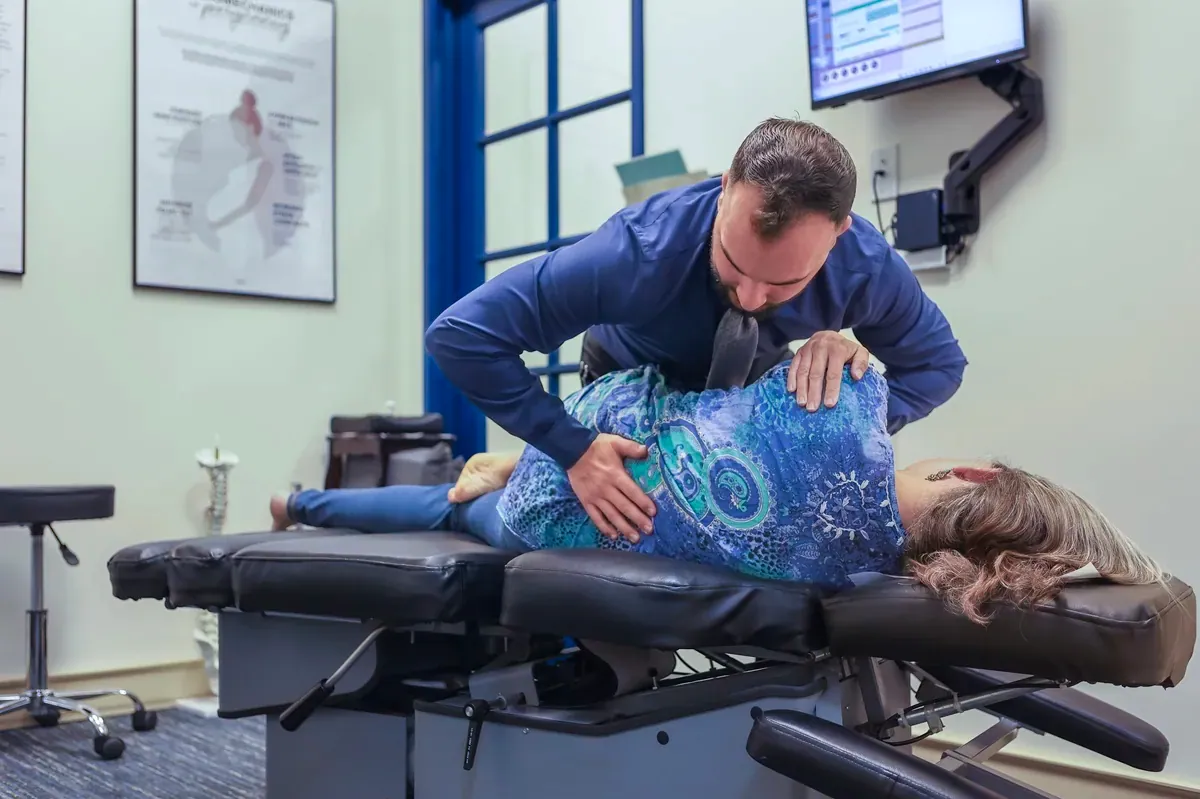
Chiropractic care takes a non-surgical, drug-free approach to addressing sciatica by focusing on the structural factors that are contributing to nerve irritation. Rather than masking the pain with medication, the goal is to identify and address the mechanical issue at the root of the problem — whether that’s a spinal misalignment, disc pressure, or soft tissue tension.
Spinal adjustments are at the core of chiropractic care for sciatica. By carefully and precisely mobilizing the vertebrae of the lumbar spine, a chiropractic adjustment can help restore proper alignment, reduce joint restriction, and create more space for the irritated nerve. Research published in journals such as the Journal of Manipulative and Physiological Therapeutics has suggested that spinal manipulation can be effective for reducing pain and improving function in patients with acute and chronic low back pain and associated leg symptoms.
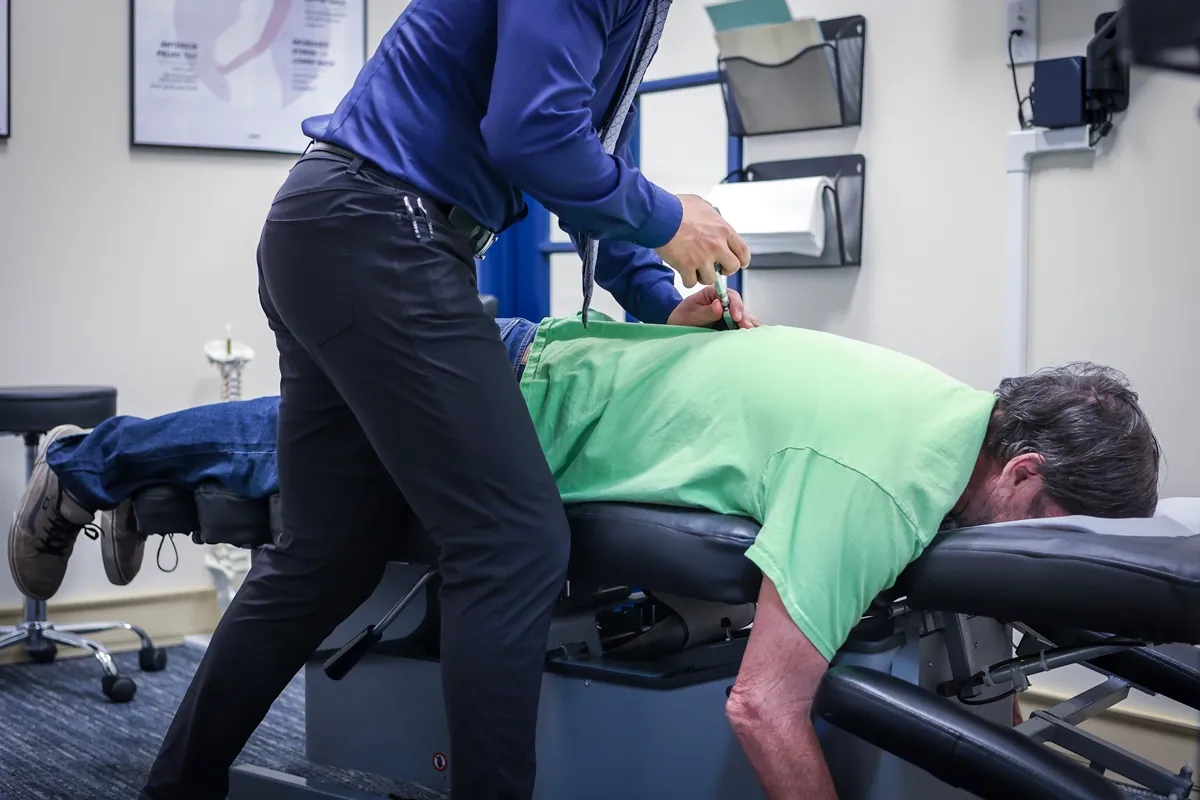
Beyond adjustments, chiropractors trained in treating sciatica often incorporate additional therapies. At Momentum Chiropractic, Dr. David Sedghi utilizes a comprehensive approach that may include non-surgical spinal decompression — a therapy that gently stretches the spine to reduce disc pressure and aim to reduce pressure on the disc and the irritated nerve. This can be particularly helpful when disc involvement is the primary driver of sciatic symptoms. Intersegmental traction, which involves a gentle rolling massage of the spinal muscles, and targeted heat therapy are also used to support tissue healing and muscle relaxation as part of an integrated care plan.
The American College of Physicians (ACP) guidelines list spinal manipulation among the non-drug options to try first for acute and subacute low back pain, before moving to medication. For patients dealing with sciatica, that kind of conservative, structural care can make a significant difference in both symptom relief and long-term spinal health.
What to Expect at Momentum Chiropractic
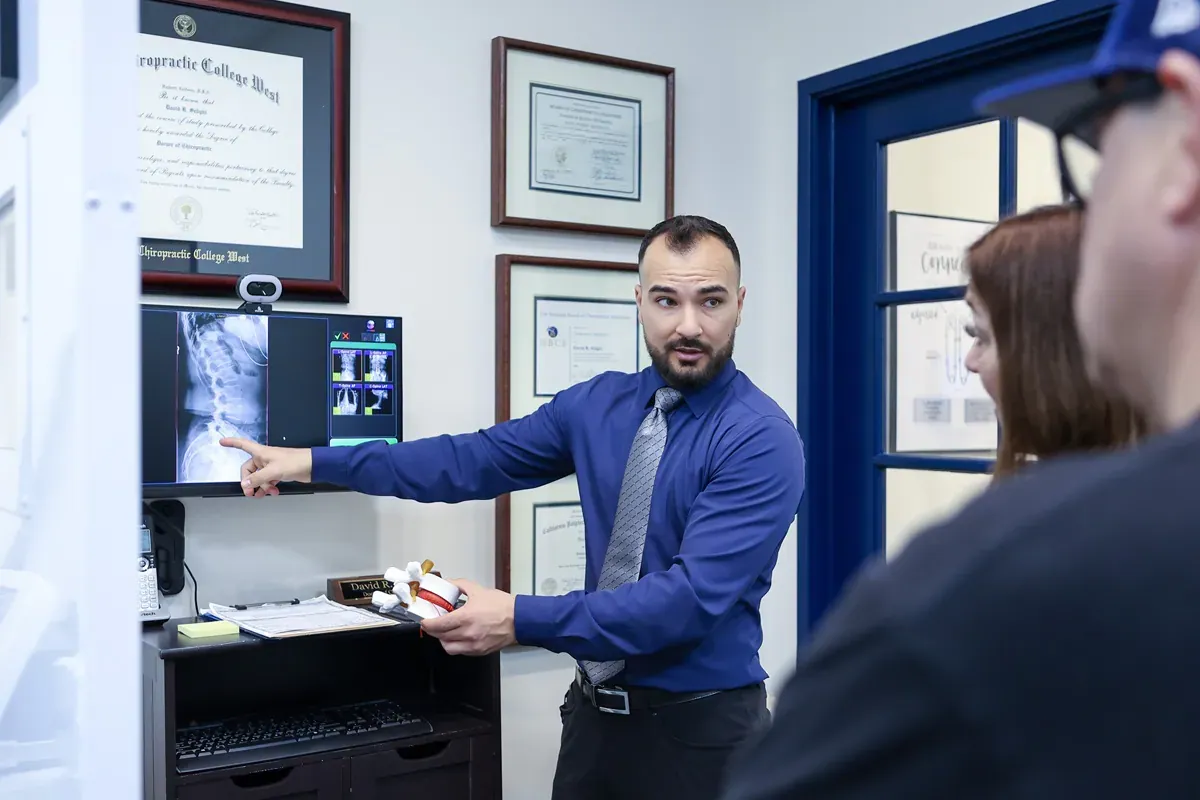
One of the things that sets Momentum Chiropractic apart in San Luis Obispo is that care doesn’t wait. When you come in for your first visit, Dr. David Sedghi takes the time to review your history, take X-rays, and actually begin hands-on treatment — all on day one. There’s no lengthy intake process where you sit and wait for a future appointment to get any relief. You walk in dealing with pain, and you walk out having already taken the first real step forward.
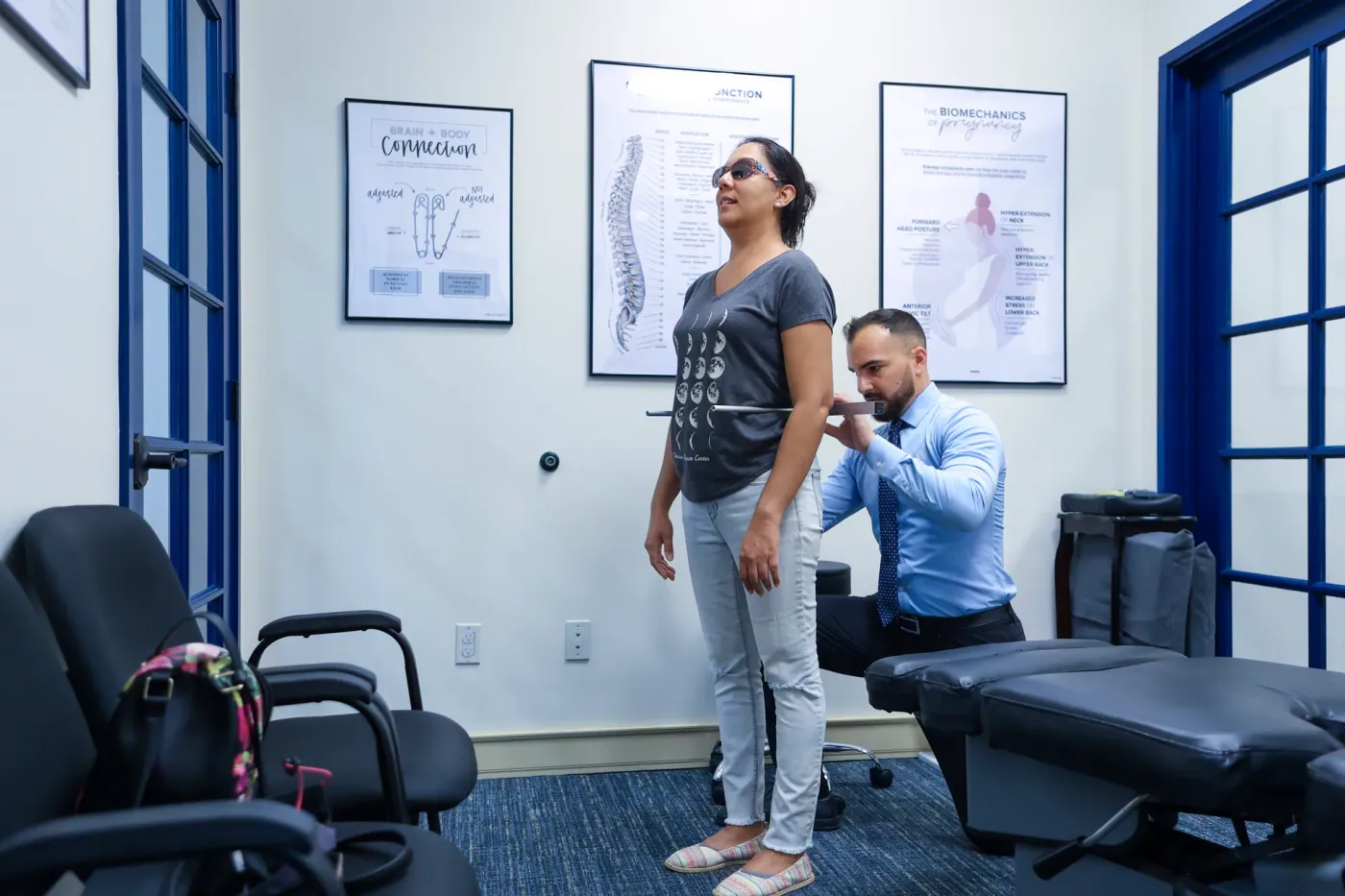
For sciatica patients specifically, the evaluation begins with understanding where the nerve irritation is coming from. That means looking at the lumbar spine carefully, assessing posture and movement, and reviewing imaging to understand what’s happening structurally. From there, a personalized care plan is developed — one that accounts for your specific presentation, your lifestyle, and your goals. Whether your sciatica is related to a disc issue, spinal misalignment, or muscle involvement, the approach is tailored to what your body actually needs.
The team here is also just genuinely kind and communicative. Many patients come to us after feeling dismissed elsewhere — told to “just rest” or given medication that never addressed the source of the problem. At Momentum Chiropractic, you’ll always know what we’re finding, why we’re recommending what we’re recommending, and what progress looks like along the way. That clarity and transparency is something our patients in San Luis Obispo consistently tell us makes a real difference in their experience.
Practical Tips for Managing Sciatica at Home
While professional care is the most important piece of addressing sciatica effectively, there are things you can do between visits — and in your daily life — that support your recovery and reduce flare-ups. These aren’t miracle solutions, but they’re small, consistent habits that can make the journey smoother.
Posture matters enormously when you’re dealing with sciatica. Prolonged sitting is one of the most common aggravators, especially if your chair doesn’t provide adequate lumbar support. Try to avoid sitting for more than 30-45 minutes at a stretch without getting up to walk briefly. If you work at a desk, a lumbar support cushion and proper monitor height can reduce the postural strain that feeds into nerve compression over time.
Gentle movement is generally more helpful than complete rest. While it might feel counterintuitive to move when you’re in pain, prolonged inactivity can actually cause surrounding muscles to stiffen and increase pressure on the nerve. Walking at a comfortable pace, swimming, or gentle stretching — particularly hip flexor and piriformis stretches — can help maintain circulation and reduce muscle tension around the sciatic nerve pathway. Always check with your chiropractor before beginning any new stretching routine to ensure it’s appropriate for your specific presentation.
Sleep position is another often-overlooked factor. Sleeping on your side with a pillow between your knees can take pressure off the lumbar spine and pelvis during the night. If you prefer sleeping on your back, a pillow under your knees can help maintain the spine’s natural curve and reduce nerve tension while you rest.
When to See a Chiropractor for Sciatica
Many people wait far too long before seeking care for sciatica — often spending months hoping the pain will resolve on its own, or cycling through over-the-counter pain medications that offer only temporary relief. If your leg pain, back pain, or radiating symptoms have persisted for more than a few weeks, that’s a clear signal that something structural needs to be evaluated.
Chiropractic care is particularly appropriate when sciatica is being driven by spinal misalignment, disc irritation, or muscular tension — which is common. You don’t need to be in crisis-level pain to benefit from a chiropractic evaluation. In fact, the earlier conservative care begins, the more options are typically available and the faster progress tends to come.
There are, however, some red flags that warrant immediate medical attention rather than chiropractic care first. These include loss of bladder or bowel control, sudden severe weakness in both legs, or numbness in the groin or inner thigh area. These symptoms can indicate a more serious spinal condition — cauda equina syndrome — that requires urgent medical evaluation. If you’re experiencing any of these symptoms, please seek emergency medical care right away. For most sciatica presentations, though, conservative chiropractic care is an appropriate and effective starting point.
Sciatica Symptom Comparison Table
Symptom | Common Cause | Chiropractic Relevance |
|---|---|---|
Lower back pain radiating into one leg | Herniated or bulging lumbar disc | High — spinal decompression and adjustments may reduce disc pressure |
Burning or shooting pain down the buttock and thigh | Lumbar nerve root compression or irritation | High — spinal adjustments can help restore proper alignment and reduce nerve tension |
Tingling or numbness in the foot or calf | Sciatic nerve compression from disc or vertebral issue | High — chiropractic evaluation can identify and address the structural source |
Buttock pain that worsens with prolonged sitting | Piriformis muscle tightness or sacroiliac joint dysfunction | Moderate to High — soft tissue work and pelvic alignment adjustment may help |
Leg weakness or difficulty walking | Significant nerve compression from lumbar stenosis or disc | Moderate — evaluation needed; may require collaborative care approach |
Pain that improves with walking but worsens with standing still | Lumbar spinal stenosis | Moderate — conservative chiropractic care may help; severity determines approach |
Myths vs. Facts About Sciatica and Chiropractic Care
Myth: Sciatica always requires surgery to resolve.
Fact: Many sciatica cases respond well to conservative, non-surgical care. Evidence consistently supports approaches like spinal manipulation, spinal decompression, and physical rehabilitation as effective first-line options before surgery is ever considered. Surgery is typically reserved for cases where severe neurological deficits are present or conservative care has been exhausted over an extended period.
Myth: You should rest completely and avoid movement when sciatica flares up.
Fact: While rest has its place during acute flares, prolonged bed rest has actually been shown to delay recovery from sciatica in many cases. Gentle, appropriate movement helps maintain circulation, prevents muscle stiffening, and supports the healing process. The key is knowing which movements are safe for your specific situation — which is exactly why a professional evaluation matters.
Myth: Chiropractic care for sciatica is just about “cracking your back.”
Fact: A chiropractic approach to sciatica is comprehensive and strategic. At Momentum Chiropractic in San Luis Obispo, that includes a thorough evaluation, X-ray imaging, spinal adjustments, non-surgical spinal decompression, traction therapy, and heat therapy — all customized to the individual patient. The goal is to address the underlying cause of nerve irritation, not just provide temporary symptom relief.
Myth: Sciatica will eventually go away on its own, so there’s no rush to get it checked.
Fact: While mild, acute sciatica sometimes resolves on its own, chronic or recurring sciatic symptoms are a signal that something structural has not been properly addressed. Waiting too long allows compensatory patterns to develop — meaning surrounding muscles and joints start adapting to the pain, which can actually make recovery more complex over time. Early evaluation gives you the most options.
Myth: If the pain is in my leg, the problem is in my leg.
Fact: This is one of the most common misconceptions about sciatica. Leg pain, tingling, and numbness associated with sciatica usually originate in the lumbar spine, where the sciatic nerve roots exit. The leg itself is simply where the nerve travels — the source of the problem is typically much higher up, in the lower back or pelvis. This is why imaging and a thorough spinal evaluation are so important in understanding what’s actually happening.
Final Thoughts from Momentum Chiropractic
Sciatica can feel incredibly isolating. When every step hurts and you can’t make it through a normal day without discomfort, it’s easy to start believing that this is just your life now. We hear that from patients all the time here in San Luis Obispo — and we want you to know that it doesn’t have to be.
At Momentum Chiropractic, Dr. David Sedghi and our team take sciatica seriously. We know that behind every patient dealing with sciatic pain is a person who wants to get back to hiking the trails on the Central Coast, playing with their grandkids, or simply sleeping through the night without waking up in pain. That’s what drives the care we provide — care built around you, starting from the very first visit.
If you’ve been living with leg pain, lower back pain, or the familiar radiating ache of sciatica, this is your reminder that you don’t have to keep managing it alone. Reach out to Momentum Chiropractic in San Luis Obispo, and let’s start building some momentum — together. Book Your Appointment today or call (805) 541-6966 and take that first step toward relief.
Frequently Asked Questions About Sciatica and Chiropractic Care
How many chiropractic visits does it take to see improvement with sciatica?
This varies depending on the severity and underlying cause of the condition. Many patients begin to notice meaningful improvement within the first several visits, while more chronic or complex cases may require a longer course of care. Dr. David Sedghi develops individualized care plans based on your specific presentation rather than applying a one-size-fits-all timeline.
Is chiropractic care safe for sciatica caused by a herniated disc?
In most cases, yes. Chiropractic adjustments and spinal decompression are considered conservative, low-risk approaches that can help reduce disc pressure and relieve nerve irritation without surgery or medication. A proper evaluation, including imaging, helps ensure that the care being provided is appropriate for your specific disc involvement.
Can sciatica come back after chiropractic treatment?
Sciatica can recur, particularly if the underlying contributing factors — poor posture, sedentary lifestyle, or spinal degeneration — are not addressed over time. Many patients find that periodic chiropractic maintenance visits, combined with lifestyle and ergonomic improvements, help reduce the frequency and intensity of recurrences significantly.
What’s the difference between sciatica and regular lower back pain?
Regular lower back pain is typically localized to the back itself. Sciatica specifically involves pain, tingling, numbness, or weakness that radiates along the sciatic nerve pathway — meaning it travels from the lower back or buttock down into the leg, sometimes reaching the foot. That radiating quality is the defining characteristic that distinguishes sciatica from general back pain.
Do I need a referral to see a chiropractor for sciatica in San Luis Obispo?
No referral is needed to schedule an appointment at Momentum Chiropractic. Patients can contact us directly to book a new patient visit, which includes a thorough evaluation and hands-on care on the same day.
Can sciatica affect both legs at the same time?
While sciatica most commonly affects only one side of the body, bilateral sciatica — pain in both legs — can occur, usually in association with more significant spinal conditions such as severe central spinal stenosis. Bilateral symptoms, especially when accompanied by bowel or bladder changes, warrant prompt medical evaluation to rule out serious causes.
TL;DR — Key Takeaways
Sciatica is pain caused by irritation or compression of the sciatic nerve, typically originating in the lumbar spine — not the leg itself.
Common causes include herniated discs, spinal stenosis, lumbar misalignments, and piriformis muscle tightness.
Chiropractic care — including spinal adjustments, non-surgical spinal decompression, and supportive therapies — is a well-supported, non-invasive approach for managing sciatica.
At Momentum Chiropractic in San Luis Obispo, Dr. David Sedghi begins hands-on care on the very first visit, with a personalized plan based on your imaging and symptoms.
Don’t wait for sciatica to become unbearable — earlier conservative care typically means more options and faster progress toward relief.